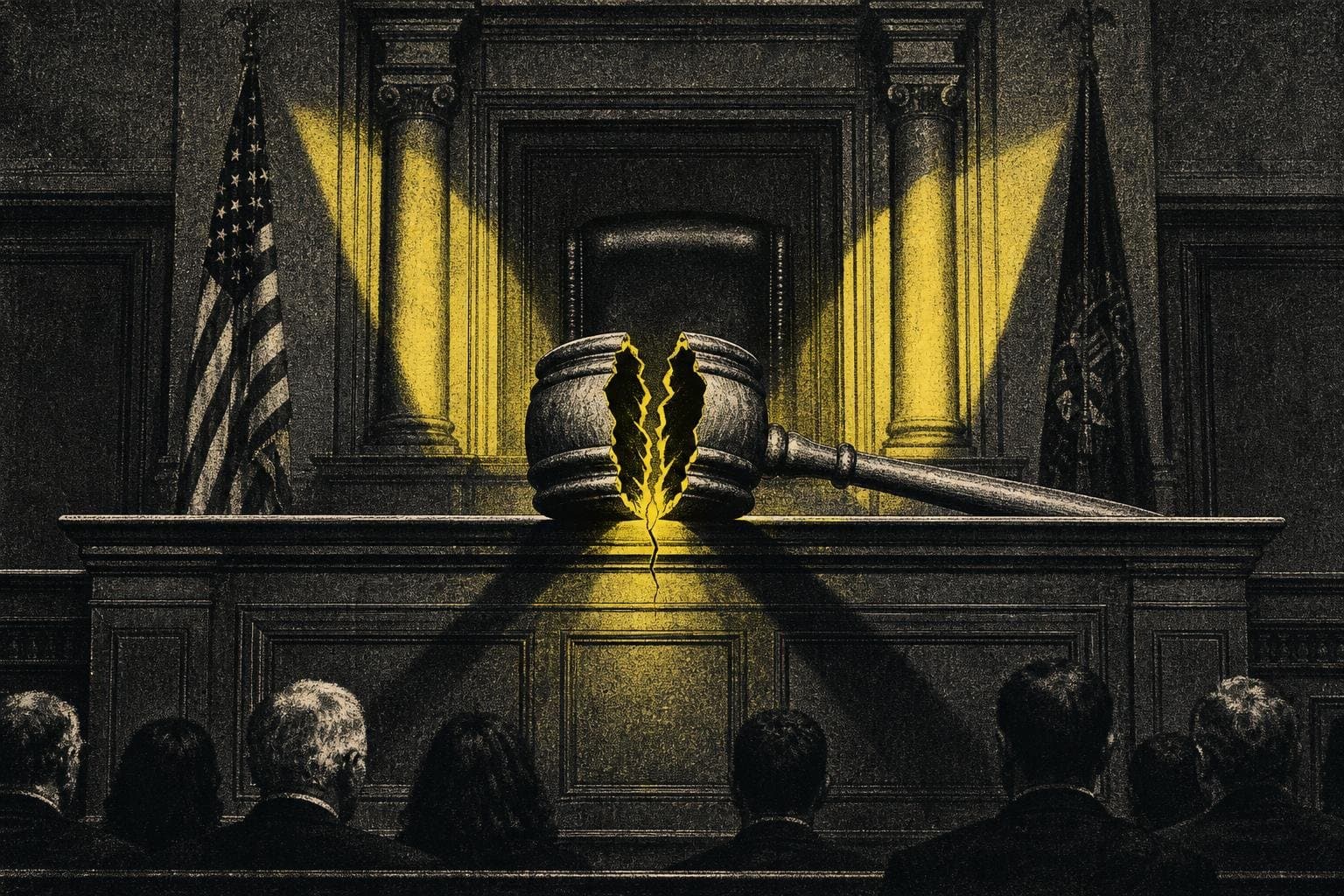

"Why do you need this?" a Ninth Circuit judge asked a Justice Department lawyer on Thursday. "You can't prosecute anybody in four days. You can't convict them in four days. ... Why do you need this?" The lawyer's answer was refreshingly honest: the government has "a serious interest, an irreparable one" in enforcing election-fraud law before Tuesday's midterms — timing be damned (Politico).
That exchange, from a hearing over DHS's so-called Unlawful Voter Initiative, is the most interesting thing that happened in immigration politics this week. It barely registered as a headline. Instead, the dominant media frame has been the one you'd expect: ICE surge terrorizes California ahead of election, intimidation by design, democracy under siege. That story isn't wrong. But it's incomplete in a way that flatters the narrative at the expense of what's actually happening in the system meant to check this kind of overreach.
The Surge Is Real. So Is the Pushback.
The reporting on enforcement activity is solid and worth taking seriously. Local groups along California's Central Coast tallied roughly 200 arrests since early October, more than double last year's pace over the same stretch, and unmarked vehicles have reportedly idled outside election offices while agents went door to door hunting for noncitizens on the voter rolls (New York Times). Separately, the reach of enforcement has expanded well past ICE and local police — officers who inspect produce, issue fishing citations, and run gaming commissions have been deputized under the 287(g) program to flag people for detention, which is how a man fishing for blue crabs near Fort Lauderdale ended up in ICE custody over an egg-bearing crab violation (New York Times).
None of that is in dispute. What's missing from most coverage is what happened when this specific pre-election initiative hit a courtroom. A federal judge already blocked it last week. On appeal, a three-judge Ninth Circuit panel — two Clinton appointees among them — openly questioned whether the operation was designed "to instill fear," and noted that DHS itself conceded it had used faulty data to decide whom to target, while also admitting agents were specifically hunting naturalized citizens to relitigate fraud questions from before their naturalization (Politico). That is not a government running roughshod over institutions. That is a government getting its case dismantled in open court, on the record, by judges who aren't buying the justification.
The mainstream framing treats the enforcement surge as an unstoppable force and the lawsuits as a footnote. The actual sequence of events argues the opposite: courts are functioning as the designed check, and doing it faster and more bluntly than editorial pages are giving them credit for.
The Part of the Story That Doesn't Fit the Villain Arc
There's a second complication the crackdown-as-pure-intimidation narrative tends to skip past. This week a hacktivist group published a searchable database exposing the identities of more than 41,000 DHS employees and contractors, including undercover agents, prompting border czar Tom Homan to warn that officers now face a sharply elevated threat to their physical safety (Washington Post). The breach itself — more than 41,000 names and contact details posted online, including for border and undercover investigators — is a serious security event by any measure (Washington Post).
I'm not interested in refereeing who the real victims are here. The point is that a clean morality play — masked agents terrorizing communities, full stop — struggles to hold two things in its frame at once: an enforcement machine that has genuinely overreached by its own admission in court, and individual officers whose safety is now also at stake. Meanwhile, separate AP reporting has documented a mentally ill U.S. citizen held in ICE detention since January, a story about institutional failure and bureaucratic indifference rather than targeted political intimidation (AP). That's a different kind of failure than the one driving this week's editorial pages, and it doesn't fit neatly into either side's preferred story.
What to Watch
The Ninth Circuit panel is expected to rule imminently, before Tuesday's election, on whether the Unlawful Voter Initiative can resume (Politico). A separate challenge is pending before Chief Judge James Boasberg in Washington over last-minute enforcement activity tied to the election itself. If the panel blocks the surge outright, the story next week won't be that Trump tried to weaponize ICE against voters — everyone already agrees that happened. It will be whether anyone bothers to report that the system stopped him before Election Day arrived.


