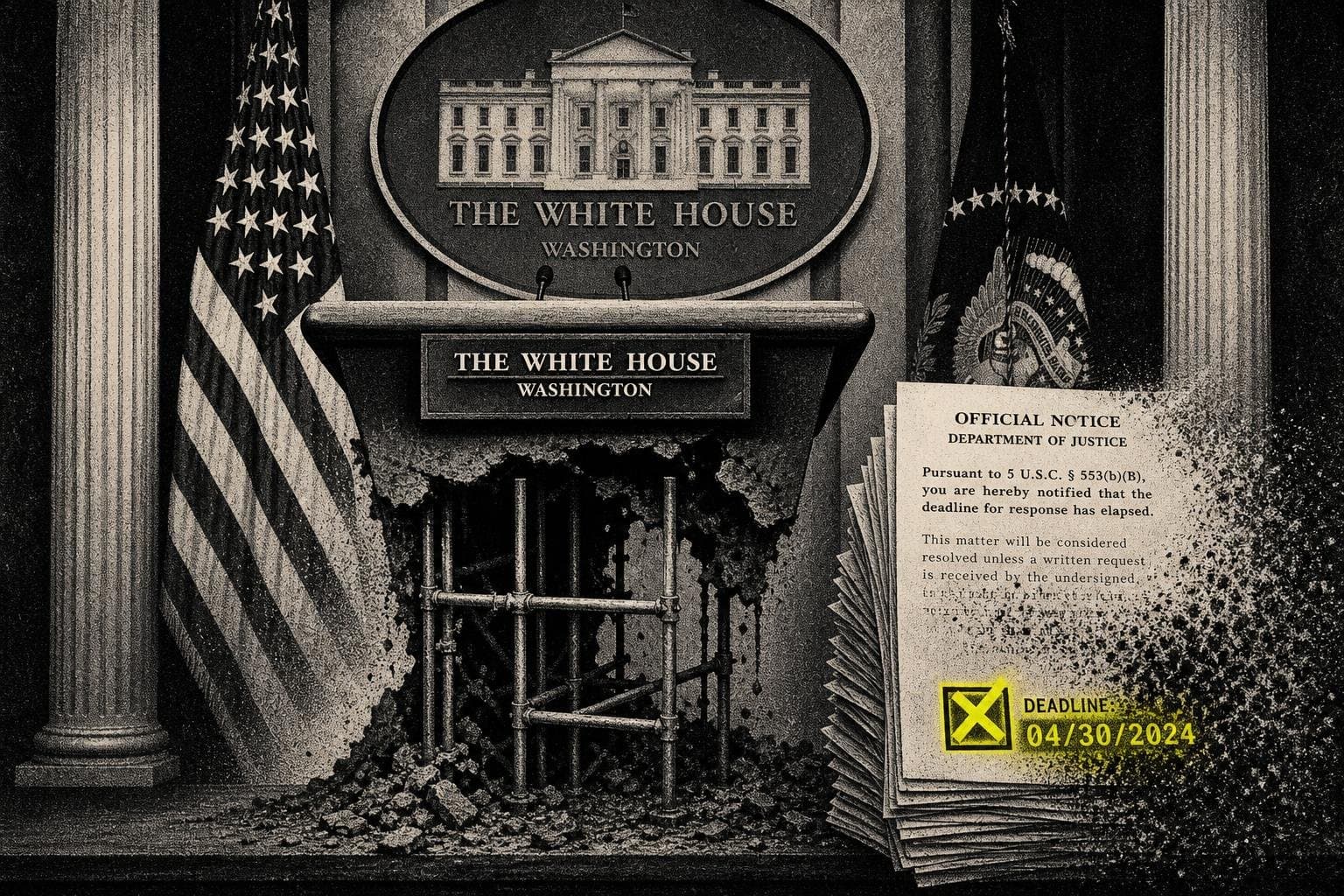

Every mainstream account of the White House press ban treats it as a morality play: an authoritarian president punishing outlets for unflattering coverage, with the First Amendment riding to the rescue. That's the story CNN, MS NOW and Politico want told, and it's the story the New York Times and CNN itself keep retelling. But sit in on the actual hearing, and the case Judge Timothy Kelly is wrestling with isn't really about speech at all. It's about whether three of the biggest newsrooms in the country missed a deadline.
The Case Everyone's Covering Isn't the Case Being Argued
Trump announced on Sept. 18 that he was barring CNN, MS NOW and Politico from White House grounds over what he called "FICTION and LIES" in their coverage, and the outlets sued within days (Reuters). Judge Kelly's first ruling didn't touch the First Amendment question at all — he found the ban likely violated the Fifth Amendment's due process clause, because five decades of D.C. court precedent require the White House to give journalists notice and a chance to respond before yanking their access (CNN).
That's a procedural ruling, not a free-press ruling. And procedure cuts both ways.
Here's the detail that's getting buried under the First Amendment framing: the White House actually sent the required notice letters after the ban took effect, giving each outlet three days to file a written response contesting the action. None of them did (New York Times). The government's lawyer, Michael Velchik, argued at Thursday's hearing that the outlets "chose not to defend themselves" — and he's not wrong about the sequence of events, even if his framing is self-serving. The outlets' lawyer, Theodore Boutrous, calls the process a "sham," arguing the president had already made up his mind. That might be true as a matter of motive. It doesn't erase the fact that the plaintiffs skipped the one procedural box the court said mattered most.
Why the Press Keeps Skipping This Part
I'd guess most readers of the Times, CNN and Politico coverage of their own lawsuit have no idea the written-response deadline came and went unanswered. That's not an accident. It's much cleaner to cover this as "press freedom versus authoritarianism" than as "newsroom lawyers made a tactical bet about which argument to prioritize, and it might cost them." The outlets' legal team clearly decided that fighting the merits — national security, "professionalism" — mattered more than checking a procedural box that a judge had already paused. Maybe that's the right call. Boutrous is betting the court cares more about Trump's stated motive — he reportedly told Time he shouldn't have to "bear" constant bad stories (via CNN's filing summary) — than about whether the outlets dotted every procedural i.
But notice what the government's own filing concedes: the White House claims it "would have taken the same action anyway," regardless of the outlets' criticism, while separately arguing the outlets failed professional standards and threatened national security (New York Times). That's three different justifications stacked on top of each other — retaliation isn't the reason, except it also is, except actually it's about professionalism, except actually it's security. A White House confident in a clean legal position doesn't need three overlapping rationales. That instability in the government's own story is the strongest card the outlets hold. It's just not the card the coverage is playing up, because "shifting rationales" is a subtler story than "Trump bans the press."
What Actually Happens Tuesday
Judge Kelly has promised a ruling by Tuesday on whether to extend the block long-term (Reuters). Watch for whether he grounds that ruling in due process — the narrower, more defensible path — or reaches for the First Amendment question the outlets actually want decided. A due-process win protects CNN, MS NOW and Politico this round but leaves the door open for the White House to try again with cleaner paperwork. A First Amendment win would be the sweeping precedent the press is hoping for, and it's also the harder one for this judge to justify given how carefully he's hewed to procedural grounds so far.
The press keeps telling you this is a story about whether Trump can silence his critics. It might actually be a story about whether three newsrooms' lawyers out-lawyered themselves.


