



The mainstream media has spent the last two weeks fixated on a familiar cycle: ICE agents shoot someone, protests erupt, the administration quietly scales back, Republicans warn Democrats not to overplay their hand. The Washington Post has covered this rhythm dutifully. Politico has noted the Democrats' déjà vu. The cycle is real, and the coverage isn't wrong.
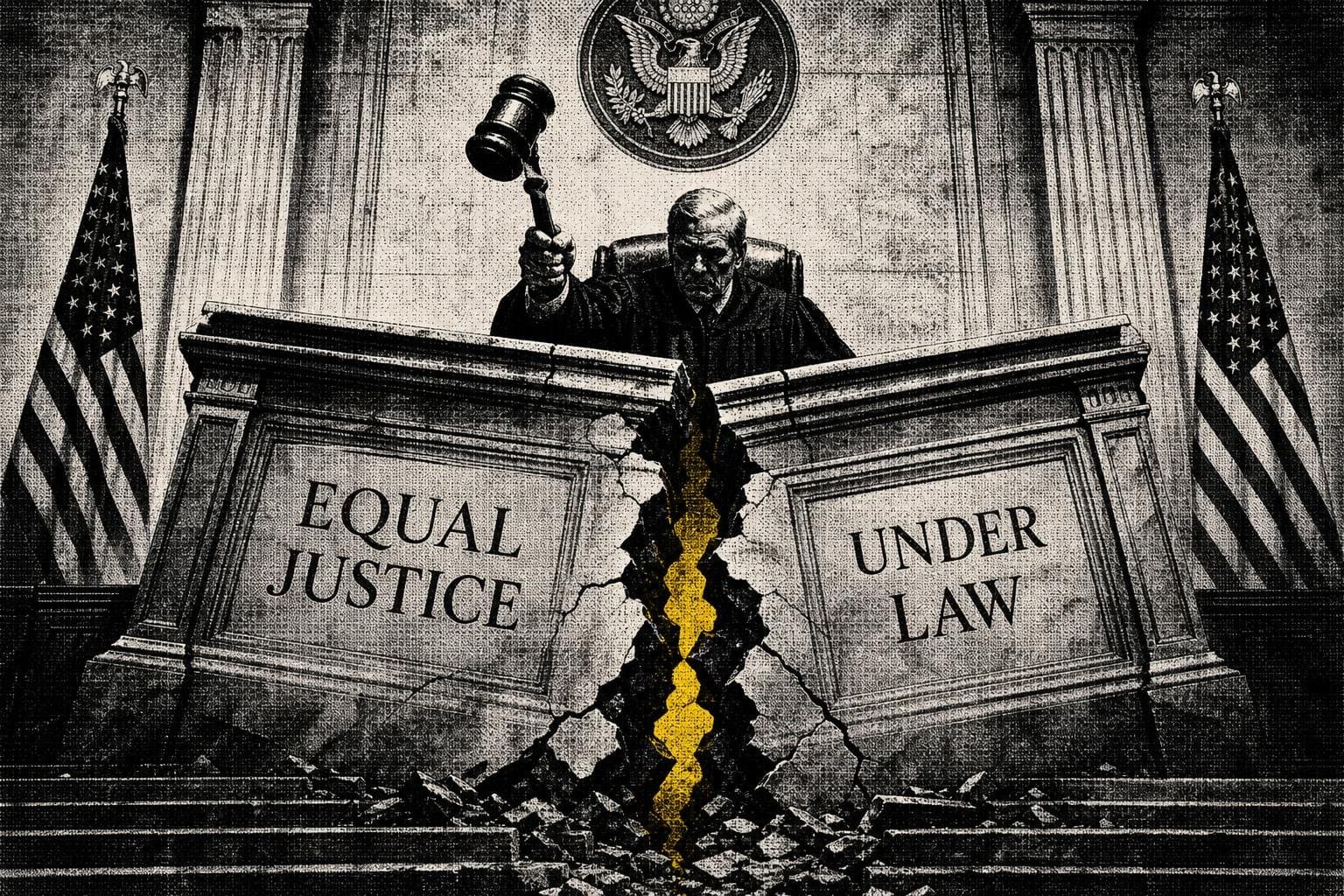
But while everyone watches the shootings and the retreats, the Trump administration quietly activated a court that has sat dormant for thirty years — a court specifically designed to deport people using evidence they're never allowed to see. That story is getting a fraction of the oxygen. It deserves most of it.
The Court Nobody Wanted to Test
The Alien Terrorist Removal Court was created by Congress in 1996 as part of the Antiterrorism and Effective Death Penalty Act. For three decades, a rotating set of federal judges sat assigned to it, ready to hear cases. None ever came. Not a single administration — Republican or Democrat — thought it had a case worth bringing before it.
The reason is obvious once you understand what the court does. It allows the government to deport someone it has designated an "alien terrorist" using evidence kept secret not just from the public, but from the person being deported. The Fifth Amendment's due process protections extend to immigrants — lawful and unlawful — within U.S. borders. Every previous Justice Department concluded that testing those protections in this court wasn't worth the constitutional risk.
This administration filed the first case anyway. And here's the detail that should stop you cold: the ATRC judge overseeing the case was not persuaded by the government's initial arguments and required additional information to be submitted. The government's first swing at a thirty-year-old dormant court — and the judge pushed back immediately.
That's not a minor procedural footnote. That's the load-bearing beam of the whole enterprise wobbling on day one.
What the Crowding Data Actually Shows
Meanwhile, the detention system undergirding the deportation machine is under its own kind of stress. Internal ICE emails and text messages released in federal court describe conditions at 26 Federal Plaza in Manhattan that officials themselves flagged as dangerous: dozens of detainees packed into rooms built for a handful, no beds, no showers, inadequate medical staff. One former detainee testified under oath: "I was just a body that they crammed into a room, almost as if to be forgotten." ICE supervisors warned in writing that they were waiting for "something negative" to happen.
The administration's directive was to hit 1,200 to 1,500 arrests per day. The detention infrastructure couldn't absorb that pace. ICE officials knew it. They kept going anyway.
This matters for the ATRC story because both reveal the same underlying logic: the administration is reaching for tools — legal, physical, procedural — that were deliberately left unused because their costs and risks were considered too high. The question isn't whether these tools exist. They do. The question is why every prior administration, including ones that were plenty aggressive on immigration, concluded they weren't worth deploying.
The Consensus Is Missing the Structural Argument
The mainstream editorial line on immigration enforcement has settled into a groove: the crackdowns are cruel, the politics are complicated, Democrats need to be careful not to look like they're defending criminals. That's a political analysis, and it's not entirely wrong. But it misses the structural argument entirely.
The ATRC case and the overcrowding documents aren't just evidence of excess. They're evidence of a system being pushed past the limits its own architects built in. The 1996 Congress that created the ATRC also built in the constitutional guardrails that have kept it unused for thirty years. The ICE officials who sent those alarmed texts about 26 Federal Plaza were the system's own internal checks doing exactly what they're supposed to do — and getting overridden.
A federal judge in Boston just temporarily blocked the administration from stripping work authorization from tens of thousands of TPS holders, with a ruling on a longer-term pause due by August 5. Courts keep pushing back. The ATRC judge pushed back. The overcrowding judge capped capacity. The pattern is consistent.
The conventional wisdom frames this as a story about political will — how far is the administration willing to go? The more interesting question is structural: what happens when an enforcement campaign systematically exceeds the legal and physical infrastructure designed to contain it? The ATRC case will answer part of that. Watch the August 5 TPS ruling for another data point. The shooting headlines will keep cycling. The constitutional architecture is where the real story is being written.