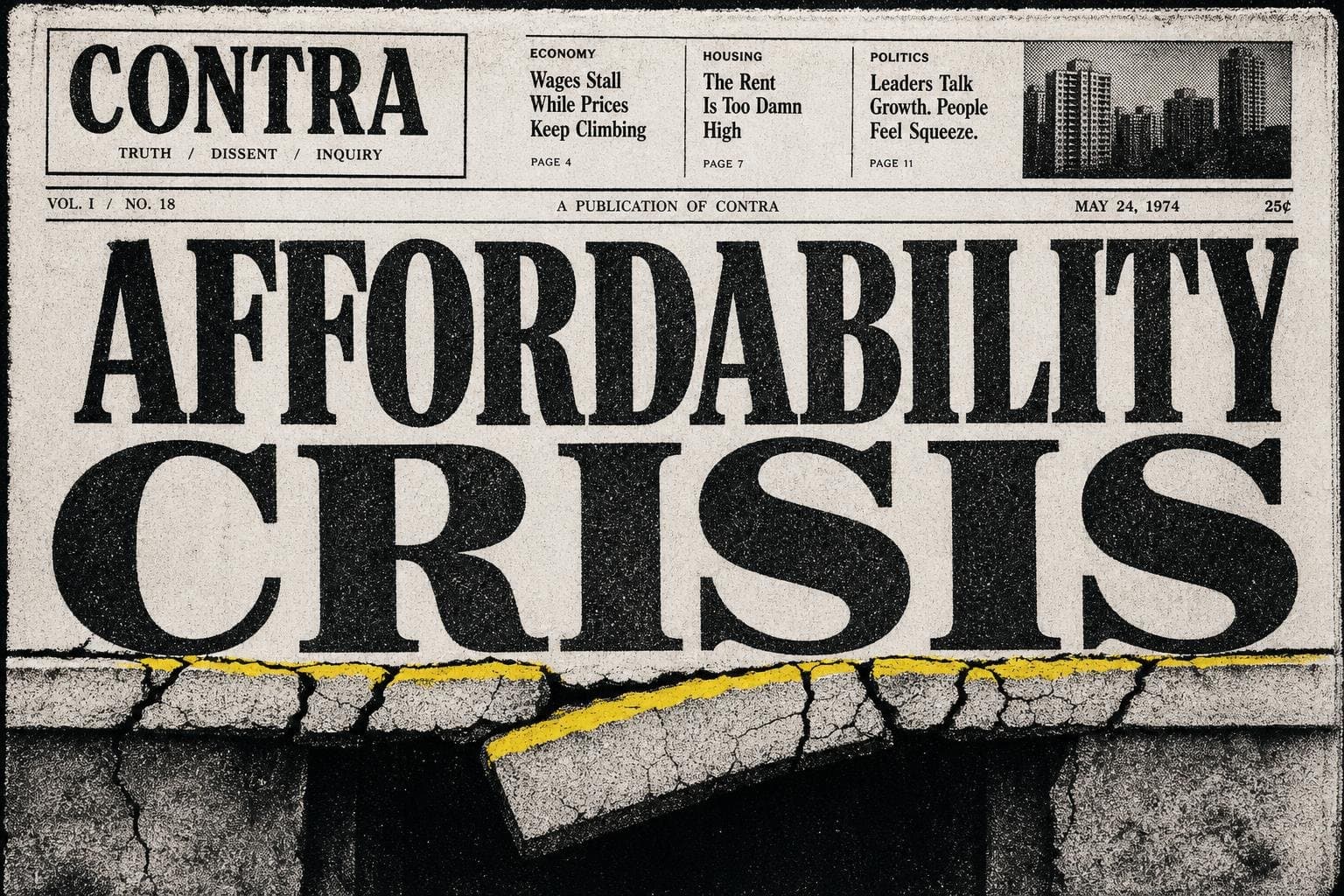

Here's a number that should break the consensus narrative in half: American paychecks are larger now than before the pandemic, even adjusted for five years of elevated inflation, according to Politico's reporting. And when gas prices spiked past $4 a gallon during the Iran war, people kept spending anyway. Federal Reserve researchers found that when Americans claimed rising prices had forced them to pull back, they were actually buying more, not less, per that same Politico piece.
Try reconciling that with the story every major outlet is running right now: inflation as the defining villain of the midterms, consumer sentiment cratering, voters about to punish Republicans for a cost-of-living catastrophe. The New York Times led last week with exactly that frame — consumer prices rising at their fastest clip since May, outpacing wage growth for a sixth straight month, gasoline stuck above $4 a gallon for most of the past six months. Reuters flagged consumer sentiment sitting near a record low heading into the election, on its Econ World desk. Everyone agrees: this is a genuine economic emergency, and voters are right to be furious.
The Weak Link: Sentiment Is Being Treated as a Measurement of Reality
Here's the assumption nobody in the mainstream coverage stops to examine: that how bad people say things feel is the same as how bad things are. It isn't, and the people who actually study this for a living are saying so out loud. Betsey Stevenson, who advised Obama on economics and now teaches at Michigan, told Politico that economists find the word "affordability" almost meaningless — everyone has finite resources, everyone's demands differ, and "you can afford anything... the question is just what you have to give up to get it," per Politico. Jason Furman, another Obama-era economist now at Harvard, has been making a related point about the gap between public perception and underlying data, according to the same reporting.
That gap is the whole story, and it's the part respectable editorial pages keep skating past because "voters are suffering and Washington is failing them" is a cleaner narrative than "voters are anxious but still spending like the economy's fine." The Economic Innovation Group's John Lettieri told the Times that cost of living "is going to be the first issue on the scorecard" this cycle. Probably true as politics. But politics and economics are not the same discipline, and conflating them is exactly the kind of sloppy equivalence that makes for a punchy A1 story and a misleading one.
Who Benefits From Calling It a Crisis
It's worth asking who gains from treating depressed sentiment as settled economic fact. Democrats benefit, because a genuine affordability crisis is a devastating midterm weapon against an incumbent party — and the Washington Post's own polling roundup shows Americans likely to vote preferring Democrats, with Trump's approval at a fresh low. CNN's coverage of early voting in Georgia, Iowa, and North Carolina found Republican turnout among the youngest voters lagging well behind 2024, and nearly twice as many men under 30 now lean Democratic compared to an even split two years ago, per CNN. None of that is fabricated — it's real movement in real polling. But movement in sentiment and voting intention is not the same evidence as a collapsing household balance sheet, and treating them interchangeably lets a political story borrow the authority of an economic one.
The irony is that the underlying data the Times itself reported cuts both ways: retail sales rose at a healthy pace in September, unemployment filings stayed low, and industrial output hit a postpandemic high, according to the Times. Those are not the data points of an economy in free fall. They're the data points of an economy where people are mad about prices and spending through the anger anyway — which is a different, messier, less narratively satisfying thing to cover.
What to Watch Instead
Skip the next round of consumer-sentiment headlines and watch the actual spending data that comes out alongside them — retail sales, credit card delinquency rates, real wage growth relative to inflation. If Americans are genuinely retrenching, that will show up in contraction, not complaints. So far, according to the sources making the loudest noise about the crisis, it hasn't. The "crisis" so far is a crisis of confidence in the people running the country, which is a legitimate and interesting story on its own — it just isn't the one the headlines are telling.


