


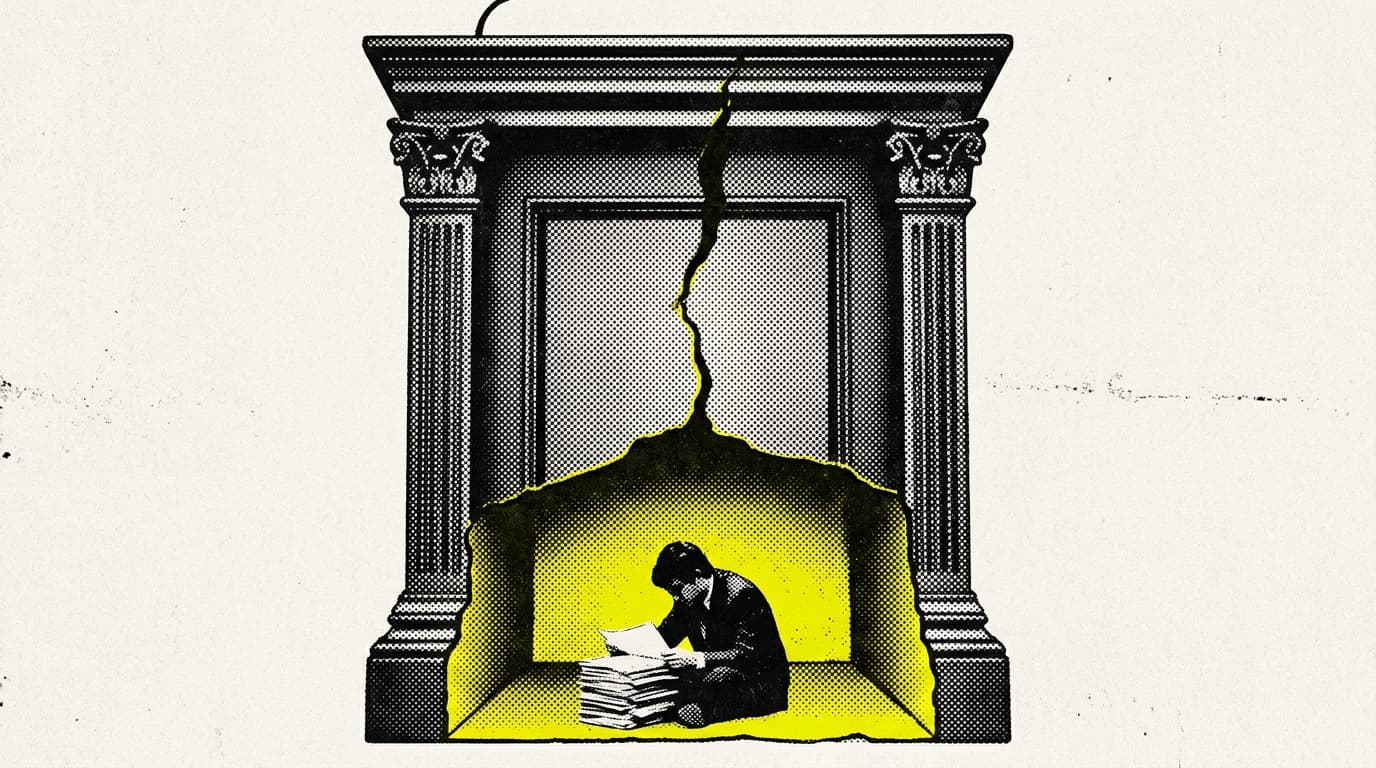

Here's what the mainstream consensus on student debt relief gets wrong: it treats "borrowers" as a monolithic group of struggling Americans crushed by predatory lending, when the actual distribution of who holds federal student debt — and who benefits from broad forgiveness — tells a much messier story.
The editorial line at major outlets has been remarkably consistent. Debt relief is a matter of economic justice. The student loan system is broken. The government should do more. All of that may be true in some general sense. But the consensus skips past an uncomfortable question: which borrowers, exactly, are we talking about?
The People Actually Drowning Aren't Waiting for Forgiveness
The borrowers in genuine crisis right now aren't the ones with $80,000 in grad school debt waiting on a policy fix. They're the ones who never finished their degrees, took out modest amounts, and are now in default.
The NYT reported in March that a record number of borrowers are delinquent or in default — a predictable consequence of the pandemic-era payment freeze ending and monthly bills resuming. These are people who couldn't make payments before any political fight over forgiveness, and they're not going to be rescued by income-driven repayment plans they can't navigate or PSLF programs they don't qualify for.
Meanwhile, the borrowers who dominate the policy conversation — the ones whose situations generate sympathetic profiles and editorial outrage — are largely graduate degree holders with high balances and, statistically, higher lifetime earning potential. The system is broken for them too, in real ways. But "broken for a future doctor with $200,000 in med school debt" and "broken for a community college dropout with $12,000 in default" are not the same problem.
The Backlog Tells You Who the System Was Built For
CNBC reported this week that over 643,000 borrowers are waiting on the Trump administration to process repayment plan applications or forgiveness requests — 553,966 stuck in the IDR queue, another 89,720 waiting on Public Service Loan Forgiveness buyback applications.
PSLF, for context, was signed into law in 2007 and targets government and nonprofit workers after a decade of qualifying payments. The buyback option — a Biden-era addition — lets borrowers retroactively purchase months they missed due to forbearance, accelerating their timeline to forgiveness. It's a genuinely useful program. It also primarily benefits people who have been steadily employed in qualifying jobs for close to a decade. That's not the most economically precarious slice of the borrower population.
And the road to PSLF just got harder. Business Insider reported that after the Trump administration eliminated the SAVE repayment plan, the Department of Education changed the formula used to calculate buyback payments — meaning borrowers who were in forbearance during the SAVE litigation period will now face higher buyback costs than they anticipated. The people most affected are those who planned carefully around a specific program, only to have the rules shift. That's a legitimate grievance. It's also a grievance that requires having been in the system long enough, stably enough, to have a ten-year plan.
The SAVE Collapse Reveals the Real Stakes
The Washington Post reported in March that the Trump administration is forcing the 7 million borrowers enrolled in SAVE to switch repayment plans or be automatically moved to the standard 10-year plan — which carries significantly higher monthly payments. Nearly half of those SAVE borrowers had incomes low enough to qualify for zero-dollar monthly payments under the plan.
That last detail is the one that should anchor the entire debate and largely doesn't. Zero-dollar monthly payments. These are people for whom any payment is a hardship. They're not waiting on forgiveness as a windfall — they're trying to stay afloat month to month. The elimination of SAVE doesn't just inconvenience them; it potentially blows up their financial stability entirely.
The mainstream consensus treats this as evidence that the government should restore or expand forgiveness programs. Maybe. But it's also evidence that the forgiveness framework — with its complex eligibility rules, decade-long timelines, and administrative backlogs — was never designed around the people most at risk. It was designed around people organized enough to navigate it.
What the Groupthink Misses
The media consensus on student debt relief is emotionally coherent and analytically incomplete. It identifies real suffering, assigns it to a sympathetic class of victims, and demands policy action. What it doesn't do is ask whether the policy architecture being defended actually reaches the borrowers in the worst shape — or whether it primarily delivers for people who were going to be financially okay anyway, just more slowly.
The record delinquency numbers are the tell. The system isn't failing because forgiveness programs are too small. It's failing because the people falling through the floor were never the ones the programs were built to catch.