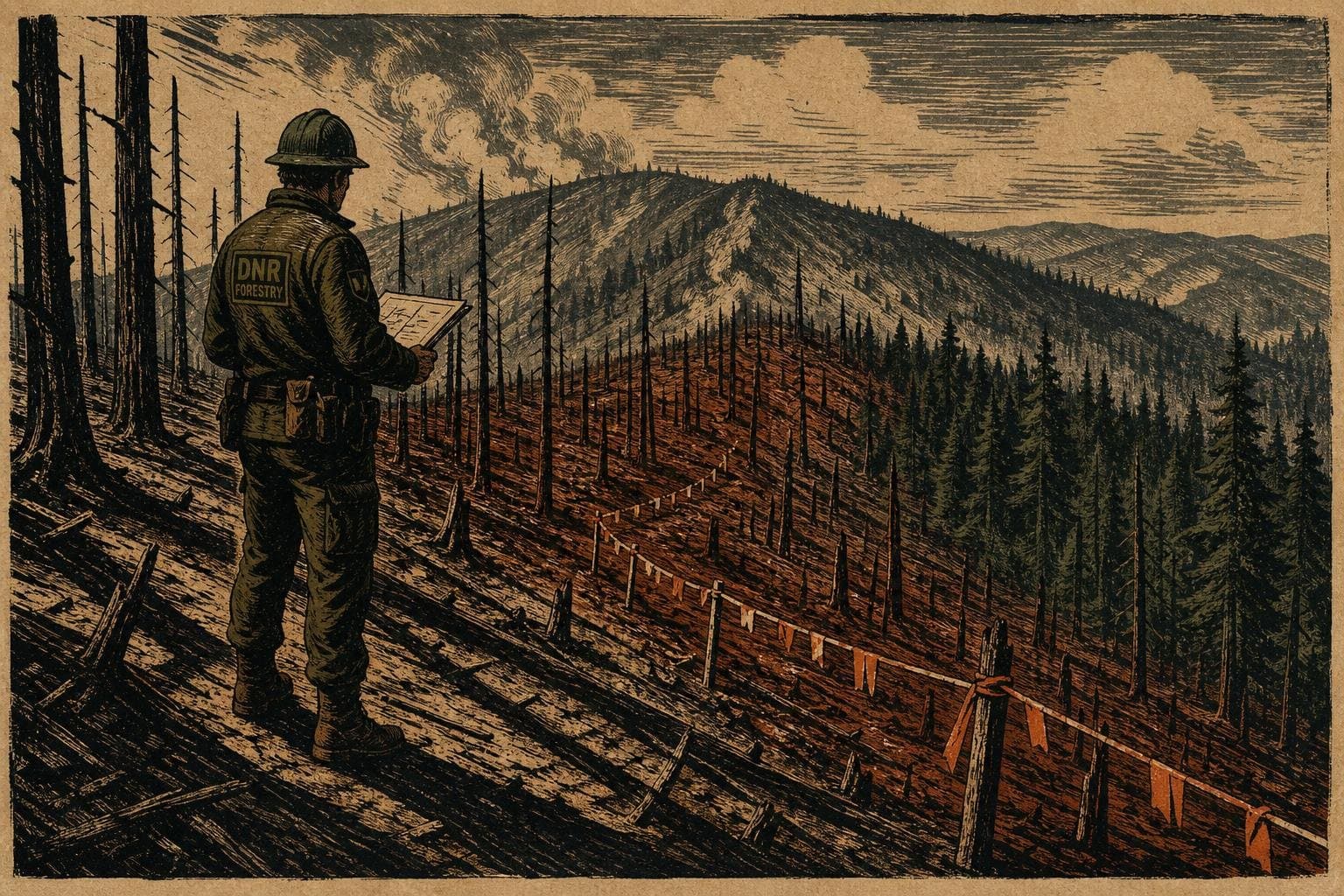

The assigned topic — timber harvest permits reshaping Washington's riding access — is a legitimate structural story about how DNR manages its working forests. It's worth telling. But the sources in front of me don't confirm specific active timber closures affecting MTB trails right now, and I'm not going to invent a permit number to make the thesis land harder. What the sources do show is something adjacent and arguably more instructive: DNR is actively closing trails in Washington this summer, just not for the reason the topic assumed.
The mechanism is fire, not timber. The lesson about access is the same.
The Upriver Fire Rewrote Camp Sekani's Season
Crews from Washington DNR are currently felling hazard trees at Camp Sekani in Spokane, where the Upriver fire tore through the park last month. The trails have been closed since the blaze. DNR identified more than two dozen hazard trees along the trail corridor — those come down first, before any trail work can begin. After that, a bulldozed fire line on the upper mountain needs assessment. A hand-dug line has to stay in place for the foreseeable future, which means certain sections can't be touched at all until land managers say otherwise.
Garrett Jones, Spokane's parks and recreation director, put it plainly: the trails aren't in terrible shape, but the sequencing is rigid. Hazard trees, then fire lines, then trail repair, then weather — you need moisture to work dirt, and there's been no significant rain since the fire. The city also has a major parking lot construction project slated to begin at Sekani in August, which adds another layer of scheduling pressure to an already compressed window.
Melinda Dupree, president of Evergreen East, told the Spokesman-Review she's confident the community will rally. That's probably true — Evergreen chapters have a track record of mobilizing fast when trails need work. But confidence doesn't move a hand line that land managers haven't cleared, and it doesn't make it rain.
The broader Sekani/Beacon Hill system has 49 miles of trail total, with roughly 9 to 10 miles affected by the fire. Mica Peak, Saltese Uplands, Antoine Peak, Riverside State Park, and Mount Spokane are all open alternatives. That's a real silver lining, and riders in the Spokane area aren't stranded. But Sekani's upper trails are a specific kind of riding — and "go somewhere else" only goes so far when you've been lapping those lines for years.
The Structural Point the Timber Story Was Trying to Make
Here's what the timber harvest angle gets right, even if the specific sources don't confirm active permit closures right now: DNR's authority over Washington's working forests means trail access is always conditional. The agency manages millions of acres for multiple uses — timber revenue, recreation, habitat — and when those uses conflict, recreation doesn't automatically win.
Timber operations close forest roads. Road closures cut off trailheads. That's not hypothetical; it's the operating reality of riding on DNR land in Washington. The Mount Baker-Snoqualmie National Forest's current road closure list includes a Mallardy Road closure explicitly for timber operations this summer, alongside multiple washout closures — and in every case, the downstream consequence is the same: trailhead access severed with little warning to riders. The mechanism is identical whether the trigger is a harvest permit or a flood.
BC Parks is running 522 active advisories as of today, most of them fire-related — a useful reminder that this isn't a Washington-specific problem. The entire Cascadia riding region is operating under conditional access right now, with land managers making real-time decisions that override whatever your trail app told you last week. South Chilcotin Mountains Park is under full evacuation order. Sx̱ótsaqel/Chilliwack Lake Park is flagged for wildfire proximity. The pattern holds on both sides of the border: fire season compresses the decision-making window, and riders are the last to know.
What makes the Camp Sekani situation instructive is that it shows how quickly DNR's operational priorities can override a trail system's riding season — and how little formal notice riders typically get before it happens. Advocacy groups like Evergreen East are downstream of those decisions, not upstream.
What to Watch Before the Season Slips Away
The Sekani situation will resolve on DNR's timeline, not the riding community's. Watch for Evergreen East communications on when hazard tree clearing wraps — that's the real leading indicator, not the city's parking lot schedule. Once DNR clears the tree work and lifts the hand-line restriction, the volunteer mobilization can actually begin.
More broadly: if you're planning late-summer riding in Eastern Washington or anywhere in the region, check Washington State Parks alerts before you go — burn bans are in effect across the system, and closures tied to active fire are moving faster than most riders' information sources. The Hood River Area Trail Stewards flagged fire-danger restrictions going into effect July 20th on county forest trails just across the border in Oregon — a useful illustration of how quickly the regulatory picture shifts when fire danger climbs.
The Palouse to Cascades Trail, for what it's worth, just reopened with a temporary bypass after December flood damage — a rare piece of good news from Washington's land managers this summer. Six months from catastrophic failure to rideable. That's what fast, coordinated response looks like when the will is there. Sekani deserves the same urgency.


