


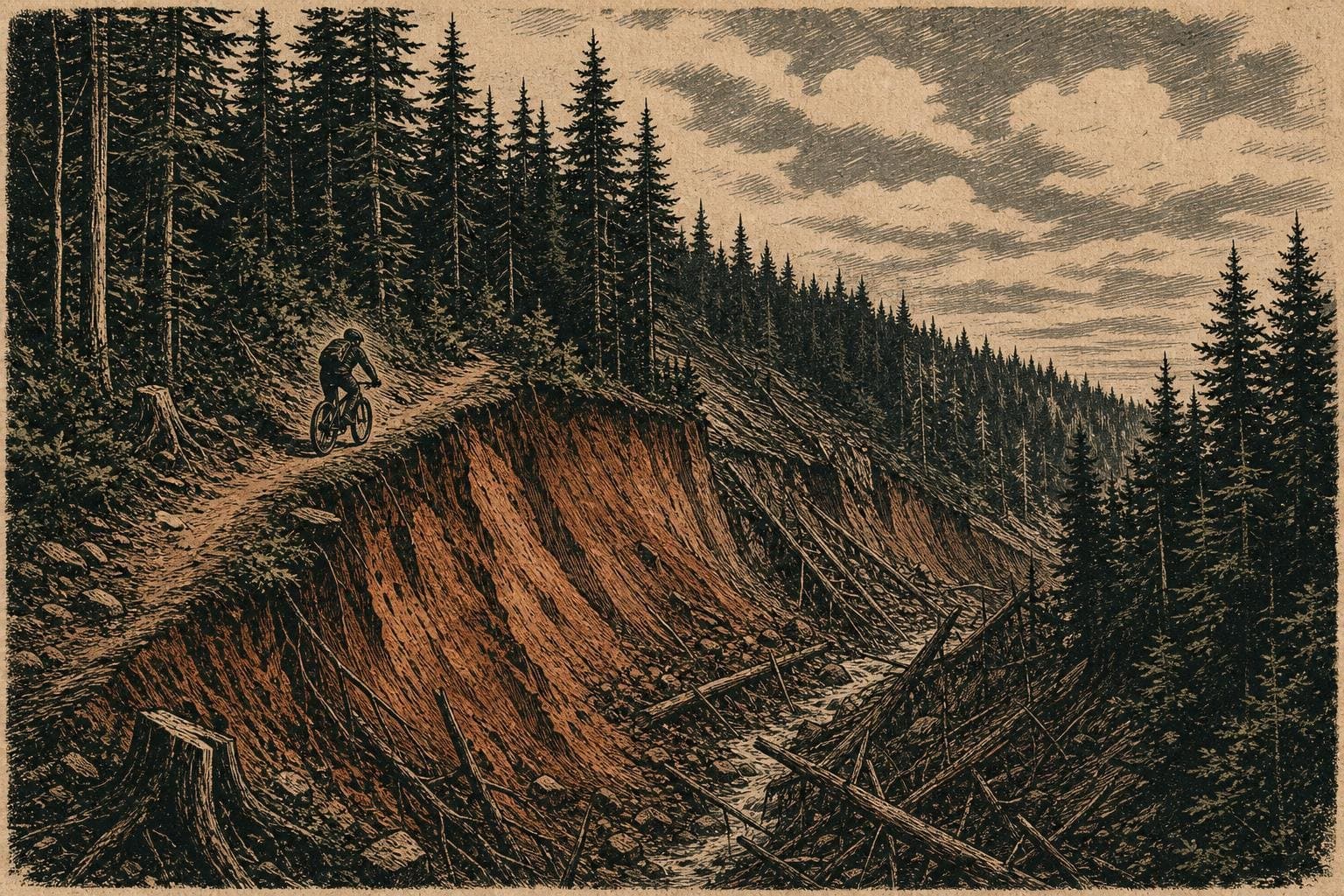

The seasonal closure story I was going to write this week got complicated by a more interesting one: Washington's trail access problems right now aren't primarily about DNR seasonal restrictions. They're about storm damage so severe that the closures are effectively permanent until someone finds the money to fix them.
That reframing matters for how you plan your summer.
The Damage Is the Closure
Six months after a series of atmospheric rivers hammered the Cascades and Olympics, Washington Trails Association Advocacy Director Andrea Imler described the situation plainly in a June 9 webinar: "Winter storms are a fact of life for Washington's trails, but this winter's heavy storms and record flooding left countless trails and roads across the state unsafe or inaccessible." The repair bill, per Forest Service officials, will easily stretch into the tens of millions of dollars — and the money isn't there.
This isn't the usual seasonal story. Mud season closures open back up. Snowpack recedes. The standard DNR playbook — close in spring, reopen when conditions allow — assumes the underlying infrastructure is intact. What we're dealing with now is a different category of problem: washed-out forest roads that haven't been repaired, which means crews can't even get in to assess trail conditions, which means the closure timeline is genuinely unknown.
For mountain bikers, that translates directly to access uncertainty that no amount of checking the DNR website will resolve. The roads that serve as trailheads are the bottleneck, and many of them are still out.
One Bright Spot, One Asterisk
The best news out of Washington this month is the Palouse to Cascades Trail reopening west of the Snoqualmie Tunnel. Washington State Parks completed a 350-foot bypass trail near the Mount Washington Trailhead, reopening the western PTCT section to cyclists on June 5. Evergreen Mountain Bike Alliance built the bypass, funded by the Washington State Parks Foundation — another example of the advocacy-plus-agency partnership model that's become the only realistic way to get things done when public budgets are thin.
The asterisk: this bypass is a temporary fix. The underlying washout — described as approximately 85 feet long and between 35 and 50 feet deep — isn't going anywhere. State Parks is still working out funding and implementation for a permanent repair, and the bypass could be in place for several years. The trail is narrower and lower-capacity than the original PTCT. Large organized events on that section are going to need alternative routing.
Worth riding? Yes. Worth knowing what you're riding on? Also yes.
The East Side Is Actually Open
Here's where the seasonal closure story does have a useful angle: while the west-side Cascades access picture is complicated by storm damage, the east side is genuinely open and underridden right now.
Washington DNR opened the Cookie Cutter trail system in Naneum Ridge State Forest — 14 miles of new trails in Kittitas County, ranging from easy to very difficult, built over several years with Evergreen Mountain Bike Alliance support. Construction started in 2018. The trails were funded primarily through EMBA fundraising, with DNR contributing to trailhead infrastructure. More connectors are planned.
I wrote about this opening back in May, but the context has sharpened since then: with west-side access genuinely constrained by storm damage, Naneum Ridge is a more compelling alternative than it might have seemed when I first covered it. Ellensburg is a reasonable day-trip from Seattle, and the east-side conditions in June — dry, firm, warm but not yet brutal — are exactly what you want after a wet spring on the wet side of the mountains.
The DNR announcement notes that state budget cuts have reduced recreation funding in recent years, and that this project moved forward specifically because of EMBA's demonstrated commitment to ongoing volunteer support. That's not just a thank-you — it's a signal about how future projects will get prioritized. Trails with active advocacy partners get built. Trails without them wait.
What to Watch
The access picture for the rest of summer will be shaped by two things running in parallel: how quickly Forest Service and county road crews can repair washed-out access roads on the west side, and whether the funding materializes for permanent fixes on corridors like the PTCT.
The Palouse to Cascades bypass is a good sign that the partnership model can move fast when it needs to. But a 350-foot bypass trail is not the same as repairing an 85-foot-deep washout, and the latter requires money that nobody has committed yet. Keep an eye on State Parks' project updates page for the PTCT long-term fix — that's the decision that actually determines whether this summer's workaround becomes next summer's permanent reality.
In the meantime: go east. Naneum Ridge is ready.