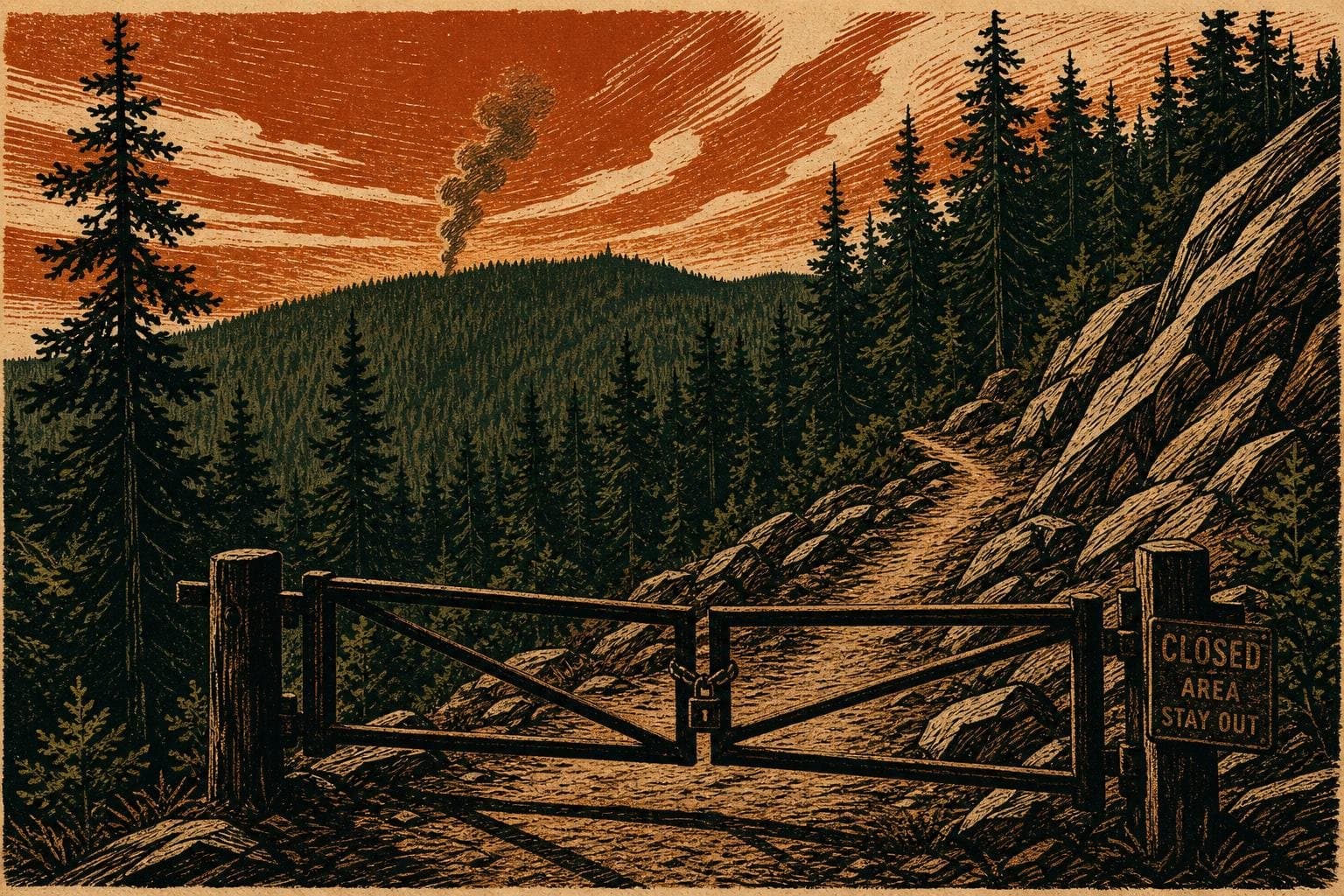

Back in July, I wrote about DNR's real role in Washington trail closures — specifically how fire and timber management interact in ways that don't always make the press release. The assigned topic this week points at timber harvest permits reshaping Cascadia access. That's a real phenomenon worth tracking. But the source pool this week tells a more complicated story: right now, in August 2026, Washington's trail closures are being driven by fire, root rot, and maintenance shutdowns as much as by logging. The timber angle is real — just not the dominant one on the ground today.
So let's look at what's actually closing trails in Washington right now, and where the timber permit question fits into that larger picture.
Fire Is Doing the Most Damage This Month
The Three Queens Fire has triggered a full public access shutdown across the Cle Elum Ranger District, with approximately 50 miles of the Pacific Crest Trail closed between Snoqualmie Pass and Deception Pass — a closure that runs through October 31. That's not a trailhead inconvenience. That's a corridor-level shutdown during peak season, enforced by law enforcement officers, affecting access trails well beyond the PCT itself.
Up in the Methow, the Ptarmigan Fire has closed the Harts Pass Road at Monument Creek and pushed its eastern border to the Hidden Lakes Trail #477, cutting off a chunk of the Pasayten. The Methow Valley Trails Collaborative is still getting work done where it's safe — the Twisp River drainage trails have been cleared this season — but conditions are shifting fast enough that they're telling people to check the Okanogan-Wenatchee National Forest alerts page before every trip.
Fire closures and timber harvest closures feel different on the ground, but they share the same structural problem: riders and hikers find out about them reactively, after the fact, when a trailhead gate is already locked. The access disruption is real either way.
The Timber Permit Story Is Unfolding Slower — But It's Real
The clearest current example of timber harvest threatening recreation access isn't on DNR land — it's a DNR-approved permit adjacent to Little Mountain Park in the Skagit Valley. On August 1, DNR approved a forest practices application for timber harvest of a 10-acre parcel next to Little Mountain Park, after Nielsen Brothers Inc., a Bellingham-based logging company, purchased the land for $70,000 in June. City of Mount Vernon officials, the Skagit Land Trust, and local residents were caught flat-footed — most didn't know about the sale until roughly a month after it closed.
The 30-day appeal window on DNR's approval is now running. The Save Little Mountain campaign has collected over 100 public comments, but with the permit already approved, the realistic options are narrowing fast. City officials are reportedly in talks with Nielsen Brothers, but the status of those conversations is unclear.
Little Mountain isn't a bike-specific trail network, but this pattern — private land adjacent to public recreation corridors sold and permitted for harvest before the community can respond — is exactly the access fragmentation dynamic that should concern anyone tracking long-term trail access in the region. The parcel is outside city limits, which means Mount Vernon has limited regulatory authority. DNR approved the application. And the community found out too late to intervene through normal channels.
That's the timber permit access story in 2026: not a dramatic corridor-wide closure, but a slow erosion of the buffer zones and connective tissue around existing public land.
The Volunteer Layer Is Holding — Barely
Meanwhile, the maintenance work that keeps trails functional is increasingly falling on volunteer organizations. Evergreen Mountain Bike Alliance's annual Kettle Fest drew statewide staff and East chapter volunteers to the Colville National Forest this summer for five days of trail stewardship — a 20-year tradition that now exists partly because federal land manager capacity has shrunk. The Outdoor Alliance Washington framing is explicit about this: agencies like the Forest Service are increasingly relying on nonprofits and their volunteer communities to fill the gap.
I've written about the ceiling on the volunteer model before. Kettle Fest is a genuine success story, but it's also a signal of how much structural work has shifted onto community organizations that run on goodwill and grant funding.
What to Watch Before September
The 30-day appeal window on DNR's Little Mountain permit closes around September 1 — that's the immediate decision point for anyone in the Skagit Valley who wants to weigh in. The Three Queens Fire closure runs through October 31, which means the Cle Elum corridor is effectively gone for the rest of the riding season. And the Highway 20 maintenance closures, funded through the Great American Outdoors Act, wrap up through mid-September — temporary pain for long-term infrastructure, which is the right trade.
The timber permit question is real and worth watching. But right now, fire is closing more trails than logging is. Both deserve attention. The difference is that fire closures end; permit-approved harvest changes the terrain permanently.


