



BC gets the glory. The North Shore, Whistler, Squamish — the origin story of modern mountain biking is written in loam up here, and nobody disputes it. But while we've been busy mythologizing our own trails, Washington has been building at a pace that deserves a harder look.
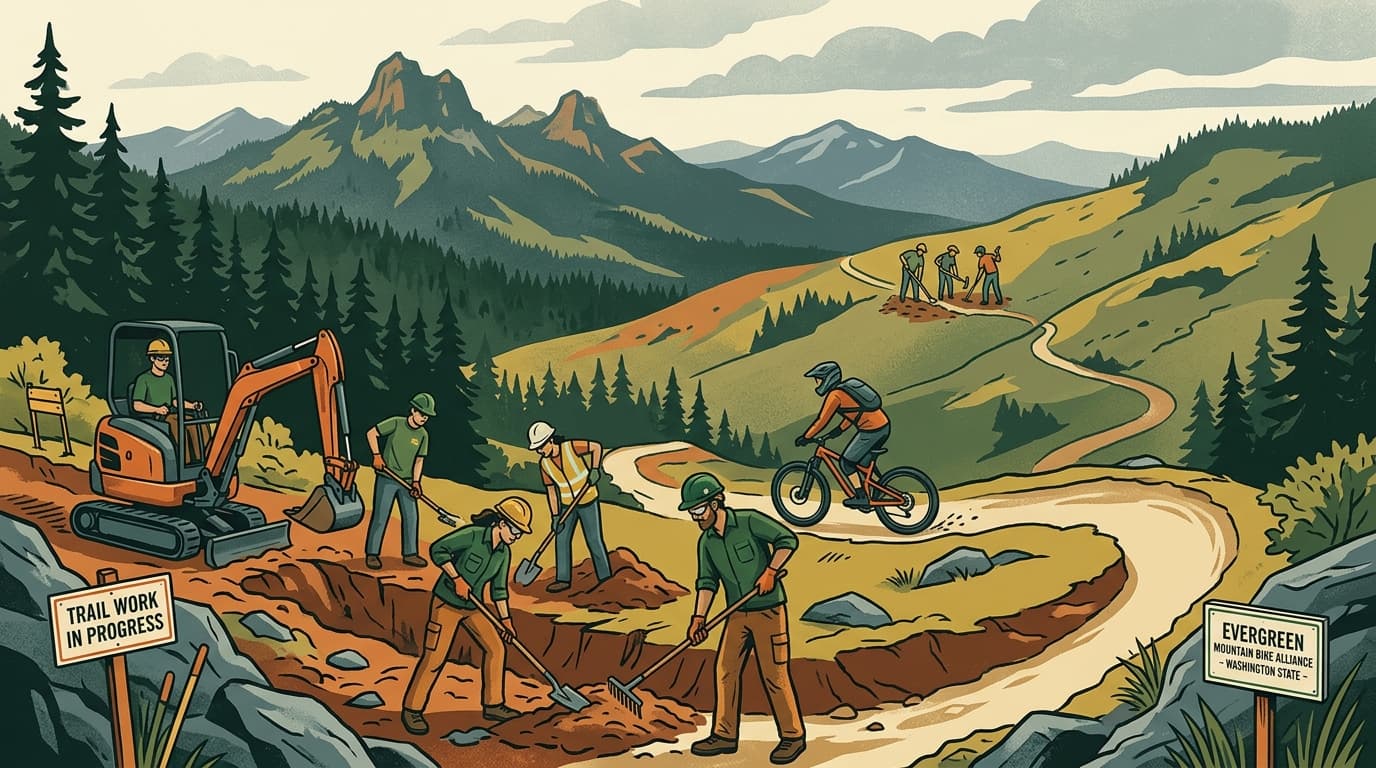
Evergreen Mountain Bike Alliance opened over 40 new trails across Washington in 2024 — two complete new trail systems among them. That's not a good year. That's a machine. The engine behind it: 15 to 24 full-time, year-round trail builders, swelling to roughly 35 at peak season, backed by an annual budget well over $3 million. Evergreen's payroll has hit 97 people. For a trail advocacy org. Let that sit for a second.
Meanwhile, the NSMBA just put out a call for 20 volunteers to cut a new entrance to Pingu. Twenty. That's not a knock on the NSMBA — those crews punch well above their weight and the North Shore trails they maintain are world-class. But it illustrates the structural difference. BC's trail networks are built on volunteer culture and passion. Washington is professionalizing the whole operation.
The Methow Valley project makes the point sharply. Evergreen's Methow chapter partnered with Loup Loup Ski Bowl and the US Forest Service to build what will eventually be nearly 40 miles of singletrack in terrain that had essentially nothing before. Sixteen miles are already rideable. That's a coordinated public-private-advocacy build happening in a valley most BC riders have never thought about. And it's not an outlier — early 2026 Evergreen updates show simultaneous active builds at Raging River, Duthie Hill, Beacon Hill, and Leavenworth storm recovery, all running concurrently.
The access gap the topic headline promises isn't really about trail quality — BC still has terrain that Washington can't touch. It's about institutional capacity. Washington has built an organization that can execute at scale, negotiate land access systematically, and sustain output year over year regardless of volunteer turnout on any given Sunday. BC's model depends on the dedication of people who show up to dig on their days off, which produces incredible trails but not reliable volume.
I'd argue the more interesting question isn't whether BC or Washington has better riding — it's whether BC's advocacy organizations can build the institutional muscle to match Washington's output before the access pressure gets worse. The NSMBA and VMBA do serious work. But Evergreen's model suggests what's possible when trail building gets treated less like a community service project and more like a professional operation with real funding behind it.
The trails on the North Shore aren't going anywhere. But the gap in new access? Washington is closing it fast.