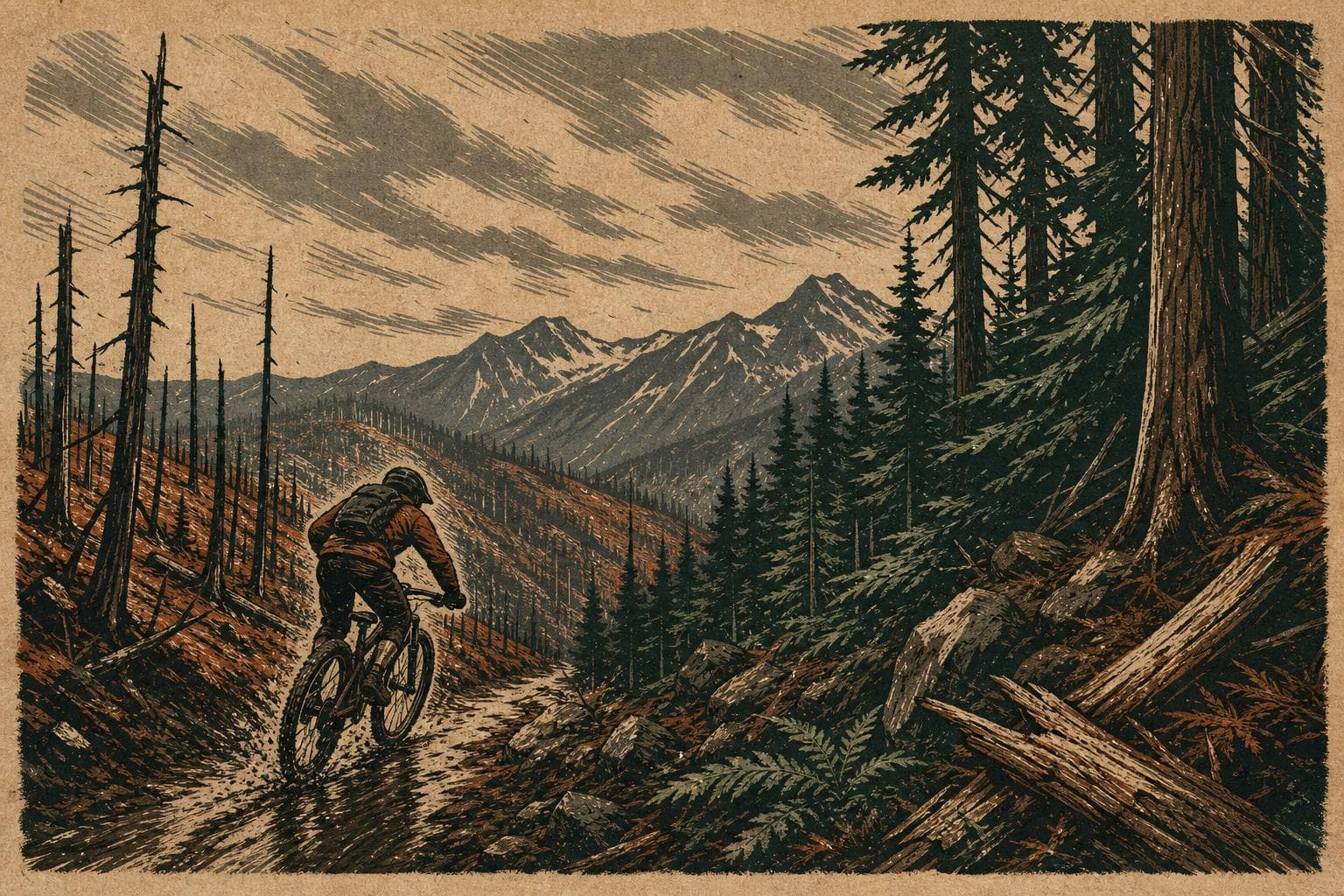

Snowpack at 53% of median. Peak SWE arriving two weeks early. Blewett Pass — which should be holding 13–14 inches of snow water equivalent in late March — completely melted out by March 24th. The Washington State Climate Office's March 2026 summary reads less like a weather report and more like a trail access forecast, and it's not a good one.
For riders in the Cascadia corridor, the implications are already visible on the ground — even if the conversation hasn't fully caught up.
The Calendar Is Shifting, But Not Evenly
The instinct is to call this a win for spring riding. Lower snowpack, earlier melt — trails open sooner, right? Sometimes. But the pattern is more complicated than that, and the complications matter.
When snowpack peaks two weeks early and then melts fast, you get a compressed runoff window. Trails that would normally drain gradually through April and into May are instead saturated all at once, then drying out earlier than the soil biology expects. That's not just a "wait a few more days" situation — it's a structural shift in when trails are actually rideable versus when they look rideable. The difference between those two things is the difference between a good spring season and a season that chews up tread and takes years to recover.
The eastern Cascades are the sharper edge of this. The Washington State Climate Office flags the central Cascades near I-90 and the Okanogan Valley as particularly hard hit — some stations there below 10% of median snowpack. Those are the zones where fire season now starts earlier, where the soil dries faster, and where the riding window that used to stretch comfortably into summer is now getting squeezed from both ends: too wet in the compressed spring melt, too dry and fire-threatened by midsummer.
Trail Builders Are Already Redesigning for This
The seasonal shift isn't just a rider problem — it's a construction and design problem, and the industry is adapting. Canadian Cycling Magazine spoke with Thomas Schoen of First Journey Trails, who's been watching climate change reshape his work for about a decade. His framing is direct: "We have these really crazy rain weather events where there is so much water running off the trails." The response is more drainage infrastructure — more culverts, French drains, rockwork — and more upfront planning with outside consultants, including wildfire specialists.
That costs money. Trail construction is already running $60,000–$80,000 per mile for professionally-built work in 2026, per IMBA Trail Solutions director Josh Olson — and that's the baseline, before you add the drainage upgrades that volatile weather now demands. Schoen's point is that trails designed for the climate of 20 years ago are increasingly mismatched to the climate they're sitting in. Building for resilience means building more expensively, and maintaining more frequently.
The wildfire angle adds another layer. Schoen describes repositioning trails to create fuel breaks — wider corridors, cleared underbrush, lines moved to serve as firebreaks. That's a design philosophy shift, not just an operational one. Trails as fire infrastructure. It's not a framing most riders think about, but it's increasingly how builders in BC's interior have to think.
The Tension Nobody Wants to Name
Here's what makes this uncomfortable: the same conditions that compress and complicate the riding season are also, in the short term, creating some of the best early-season conditions some areas have seen. Trails that were snowbound into May are opening in March. That feels like a gift. Riders are out earlier, stoke is high, and nobody wants to lead with "actually, this is a warning sign."
But the Washington snowpack data is unambiguous. Only two years since 1985 have come in lower — 2005 and 2015 — and both were followed by significant drought impacts. The fire season implications for eastern Washington this summer are already being flagged. If the pattern holds, some of the trails that opened early this spring will close early this summer, either from fire or from land managers pulling access during extreme fire danger.
The net riding season may not actually be longer. It may just be shifted and more volatile — harder to plan around, harder to build for, and harder to steward.
What to Watch Before Summer
The next inflection point is how quickly the central Cascades dry out and whether fire danger triggers early closures on the eastern slopes. Watch Washington DNR's fire restriction updates through May and June — that's where the season's actual shape will become clear. On the BC side, the Interior's fire outlook will be the variable that determines whether the extended spring window translates into a full summer season or gets cut short.
Evergreen Mountain Bike Alliance's trail condition reports will be worth tracking closely as the melt progresses — particularly for the I-90 corridor trails, which the snowpack data flags as the most compromised zone this year. If you're planning a summer trip to the Methow or Okanogan, build flexibility into the calendar. The season you thought you knew is operating on a different schedule now, and it's not going back.
Community note: Northwest Trail Alliance's CLIMB project at Cascade Locks is running Thursday and Saturday volunteer dig days as conditions allow — 45 volunteers turned out on March 21st and finished the eastern section of Peregrination. If you're in the Columbia Gorge zone and want to put hands on something real this spring, that's the place to be.


