



The new R&D office in North Vancouver isn't a press release move. It's a structural decision — and it tells you more about where Rocky Mountain is headed than any product announcement.
When Rocky Mountain moved its engineering team into a new North Vancouver facility in October 2025, the brand framed it in the language of homecoming: roots, legacy, the Shore. That framing is easy to dismiss as marketing. But the underlying logic is worth taking seriously, because it reflects something a lot of Cascadia brands have been quietly working through — what does it actually mean to build bikes here, and why does location matter?
The Shore as a Testing Ground, Not a Backdrop
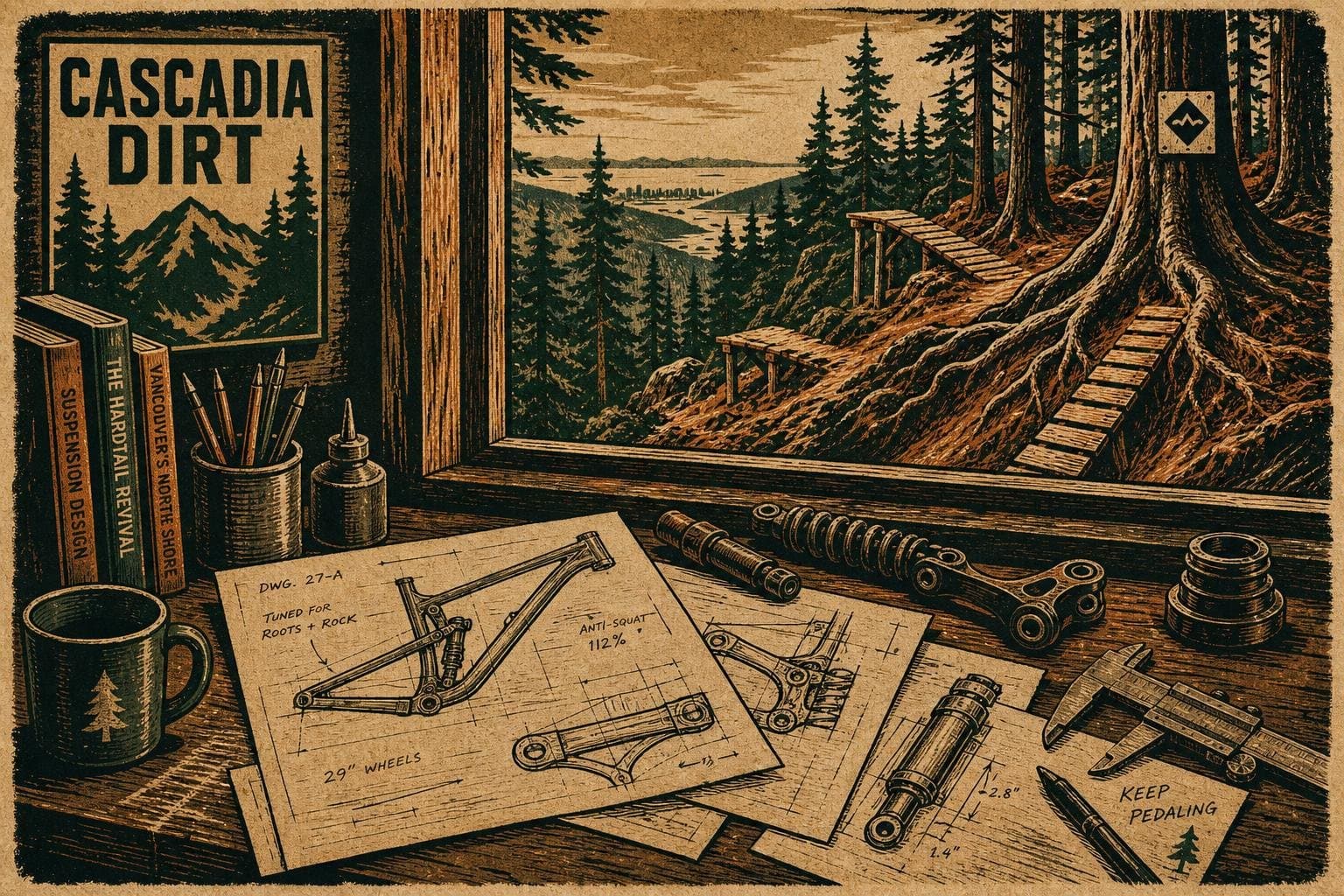
Rocky Mountain has been a North Vancouver brand since 1981, but "being from the Shore" and "engineering for the Shore" are different things. The new R&D office puts designers and engineers within riding distance of the technical terrain that defines the brand's identity — roots, rocks, ladder bridges, the kind of trail features that expose chassis flex, suspension sensitivity, and geometry compromises faster than any lab test.
That's not a small thing. The brand's own account of the move describes the North Vancouver office as the place where "history is coming to life" and where innovation starts — which reads like marketing until you consider the alternative. When R&D is centralized somewhere disconnected from the riding culture the brand serves, you get bikes designed around data and trend reports. When it's embedded in the community, you get bikes that actually solve problems riders encounter on the ground.
Whether Rocky Mountain executes on that premise is a separate question. But the structural decision to anchor engineering in North Vancouver rather than consolidating it elsewhere is the right call, and it's worth acknowledging.
Ownership Change, Manufacturing Reality
The other piece of context here is ownership. Rocky Mountain was acquired by Chaos Sports Inc., a consortium of four Canadian entrepreneurs — three of whom have ties to Maui Bikes, a Quebec-based e-bike manufacturer. Manufacturing is based in Saint-Georges, Quebec. That's a dual-center model: North Shore for R&D and identity, Quebec for production.
The assigned topic framed this as a "reshoring pivot" and a "Cascadia manufacturing renaissance." The sources don't support that characterization. There's no announced supply chain overhaul, no reshoring initiative on the record. What there is: a Canadian-owned brand with Canadian manufacturing, doubling down on Canadian engineering talent in the region that shaped the sport. That's a meaningful story on its own terms — it doesn't need to be inflated into something it isn't.
The Maui Bikes connection is worth watching, though. Three of the four new owners built a Quebec e-bike operation before this acquisition. Rocky Mountain's next major product announcement is the new Altitude Powerplay — an e-MTB. The ownership's background in electric manufacturing and the brand's next flagship product are pointing in the same direction. Whether that shapes production decisions over the next few years is a real question, even if the answer isn't on the record yet.
What This Actually Means for the Cascadia Scene
I wrote back in May about Transition's model — small-town production culture, deep community ties, a deliberate resistance to the scale-at-all-costs logic that's hollowed out a lot of the industry. Rocky Mountain is a bigger operation with a different ownership structure, but the North Shore R&D move is a version of the same instinct: stay close to the terrain and the riders, let that proximity shape the product.
The Cascadia brands that have held their ground through the component crunch and the broader industry contraction share a common thread — they're not trying to out-resource the big players. They're betting that proximity to the riding culture produces better bikes than distance from it. The North Shore itself enforces that standard: the technical trail networks around North Vancouver — steep, rooted, unforgiving — have a way of exposing bikes that were designed for somewhere else. Rocky Mountain's structural choices in 2025 suggest the new ownership understands that bet.
The test will be whether the North Vancouver office actually influences what comes out of Saint-Georges, or whether it's a well-appointed brand asset that gets photographed for lookbooks. Watch the Altitude Powerplay closely when it ships — the geometry decisions, the suspension tuning, the terrain it's clearly been optimized for. That'll tell you whether the Shore is shaping the bikes or just the story.