


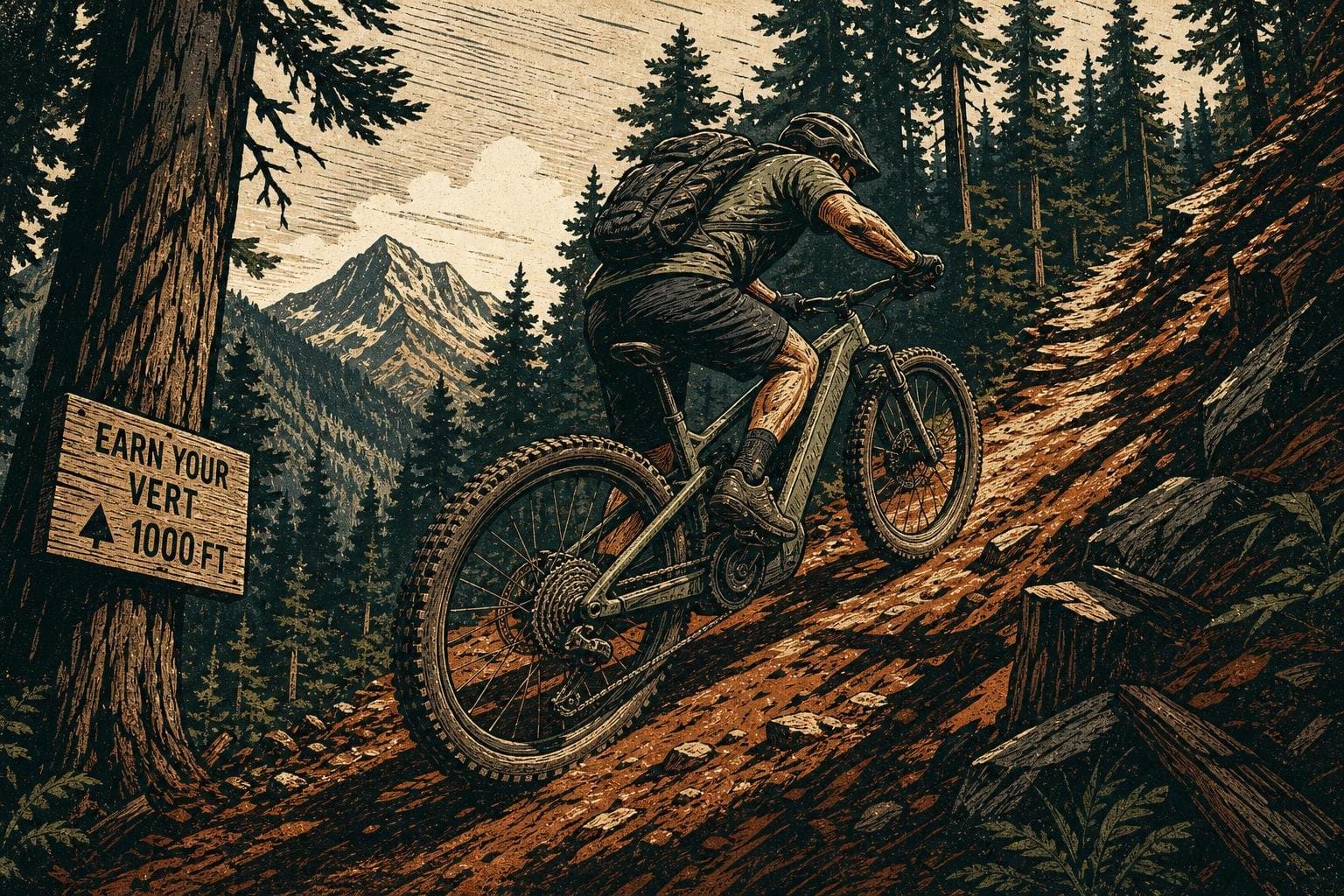

If you've ridden the Squamish network on a pedal-assist bike in the last couple seasons, you already know the vibe: half the climbing trails are fine with it, nobody's posted a sign saying otherwise, and everyone's just kind of hoping the ambiguity holds. That's not a Squamish problem specifically. It's the default state of e-bike access on contested singletrack across North America right now, and the moves being made elsewhere this fall tell you more about where this is headed than any local chatter does.
I went looking for a formal VMBA push to codify e-bike rules on Squamish's trails and didn't find the paper trail to back that up yet — no public comment period, no board statement, nothing in the record I can point to. What I did find is a pile of evidence that the underlying fight — who gets to ride what, and under which classification — is being litigated right now in three different jurisdictions, and the outcomes there are the playbook any BC or Washington trail association will eventually have to work from.
The Class System Is Doing More Work Than the Bike Itself
Start with the basics, because this is where most access arguments actually live or die: not "e-bikes yes or no" but which class. A Class 1 pedal-assist rig that cuts out at 20 mph gets treated almost like a regular mountain bike in most jurisdictions; a Class 2 throttle bike or a Class 3 speed pedelec gets a much harder look, especially on multi-use trail (ebiketravelers.com). That distinction is the entire ballgame for any land manager trying to write a policy that doesn't blanket-ban the mobility-impaired rider on a Class 1 alongside the kid redlining a throttle bike down a hiking trail. Get the classification language wrong and you end up with the mess Riverside just had.
Riverside Shows You What Happens When You Skip That Step
The Riverside City Council had to send its proposed e-bike ordinance back to committee after realizing the draft, as written, would have banned e-bikes outright from the Santa Ana River Trail — not the intent, according to the councilmember who co-wrote it, but the result of imprecise language worked out with the police department and city attorney's office (raincrossgazette.com). The pushback came from exactly the riders you'd expect: a Parks and Rec commissioner who relies on pedal-assist because walking long distances is painful, and the local bike club's president pointing out how many of their older members depend on e-bikes to keep riding at all. That's the pattern any trail association drafting e-bike rules needs to internalize — a ban aimed at reckless throttle riders tends to catch the exact riders it wasn't meant for if the drafting isn't precise.
Montana's Fight Is the One Worth Watching Closely
The more useful parallel for Cascadia's volunteer-run trail groups is Montana, where a University of Montana researcher has spent years inside the e-bike debate and found both sides arguing in caricature — one camp framing e-bike riders as cheaters, the other framing e-bike skeptics as gatekeepers protecting turf they don't actually own (thepulp.org). That's the texture of the conversation happening in trail-association comment threads and annual meetings everywhere, including, I'd bet, inside VMBA's own membership. It rarely gets decided on data. It gets decided on who shows up and how the rule gets worded.
And then there's the federal layer shaping the backdrop: the National Park Service's proposed rule, open for comment through November 2, would let superintendents designate e-bike access on roads and parking areas without the environmental review currently required, while leaving wilderness areas untouched and giving individual parks room to restrict based on resource concerns (deseret.com, townlift.com). It's a federal land system, not a provincial or state one, so it doesn't touch Squamish directly. But it's a signal that the policy conversation is moving toward faster, more locally discretionary decision-making rather than blanket prohibition — which is the direction any BC or Washington land manager will feel pressure to follow if riders keep pushing.
None of this means Squamish's e-bike questions are settled, or even formally on the table yet. It means the groundwork for how that conversation goes — precise classification language, input from riders who actually depend on pedal assist, and discretion handed to the people managing the actual trail rather than a blanket rule from above — is being tested in real time elsewhere. When VMBA or any Cascadia association does put something in writing, the smart move is to watch whether they borrow from what worked in these fights or repeat Riverside's first draft.