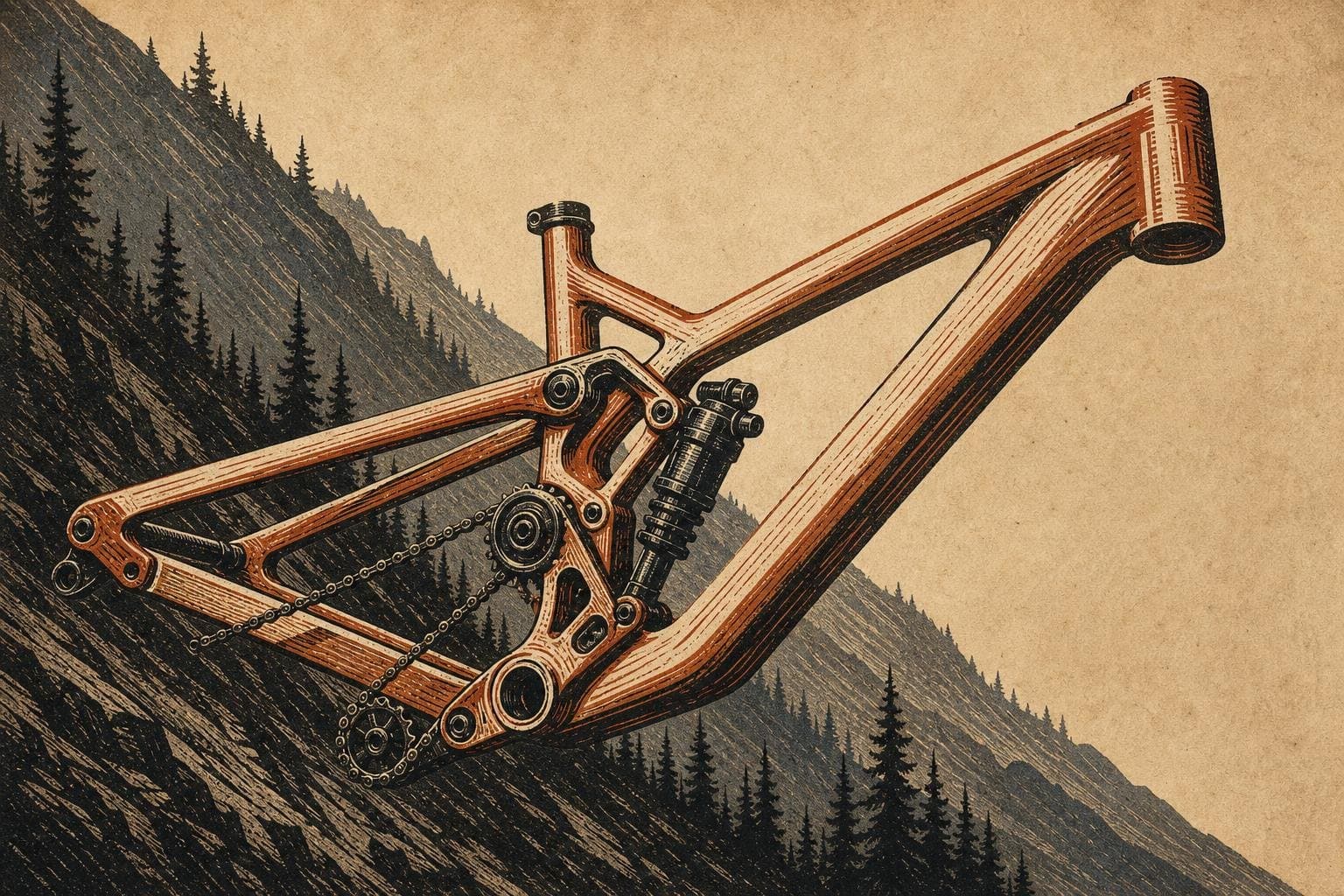

Two years is long enough to stop speculating. The Forbidden Dreadnought V2 has been ridden hard enough, in enough conditions, by enough people outside the marketing bubble that we can actually talk about what the high-pivot platform does and doesn't deliver — and what it signals for the builders working in its shadow.
The Pro's Closet published a detailed owner account in August from a rider who's put two years on a 2024 Dreadnought V2. The bike runs 160mm rear / 170mm front travel, full 29-inch wheels, and the S2 frame sits at a 450mm reach. The rider swapped the stock air shock for a coil unit, took it to bike parks and Front Range trails, and came out with a nuanced read: the rearward axle path through rough terrain is genuinely different, not just marketing copy — but the added drivetrain complexity (the idler pulley, the chain management) is real, and it adds maintenance overhead that not everyone wants.
That's the honest version of the Forbidden story. Not a revolution, not a gimmick. A specific suspension philosophy that works well for a specific rider and terrain profile, built into a production frame that's now been stress-tested outside controlled conditions.
The Platform Bet Is Already Placed
I've written about Forbidden's strategic direction twice this year — most recently in July when the vertical integration question was front and center. The through-line across all of it: Forbidden isn't building bikes that compete on spec sheets. They're building around a suspension geometry argument, and the Dreadnought is the clearest expression of that argument in the gravity segment.
What's changed since those pieces is that the argument now has two years of real-world data behind it. The Pro's Closet account confirms what the platform's proponents have been saying — the high-pivot geometry does what it claims in rough, fast terrain — while also confirming what skeptics have flagged: it's a more demanding bike to own. Idler pulleys wear. Chain management requires attention. The complexity isn't invisible.
For Forbidden, that's a calculated trade-off. They've positioned the Dreadnought as an enduro and bike-park bike, not a do-everything trail machine. The Flow Mountain Bike best trail bikes guide notably lists the Forbidden Druid as an omission — not because it's bad, but because Flow hasn't tested it. The Dreadnought doesn't appear in that category at all, which tracks: it's not a trail bike. It's a gravity bike with a specific use case, and Forbidden has been consistent about that.
The question for local builders isn't whether Forbidden's platform is good. It's what it means to be building in the same market.
What Local Builders Are Actually Up Against
The custom and small-batch frame building world in Cascadia operates on different logic than Forbidden's production model. The MADE 2026 bike show coverage from Bikepacking.com — which ran in late August — is a useful counterpoint here. The builders showing at MADE are working in steel and titanium, building for fit and feel and longevity, often for bikepacking and all-road applications. That's a different customer, a different value proposition, and a different conversation entirely.
But the gravity segment has its own small-batch builders, and they're the ones who feel Forbidden's platform most directly. A high-pivot enduro frame isn't a casual build. The idler pulley system, the frame geometry tolerances, the suspension kinematics — all of it requires engineering investment that a one-person shop in Bellingham or a three-person operation in North Van can't easily replicate without significant R&D overhead. Forbidden has already done that work, refined it across two frame generations, and is selling the result at a price point that makes the custom alternative a very hard sell on pure performance terms.
Where local builders can still compete is on the margins Forbidden can't reach: custom geometry for riders who don't fit production sizing, material choices that production runs won't support, and the kind of direct builder-to-rider relationship that a company with a distribution network can't replicate. The Pro's Closet account mentions that the S2 frame's 450mm reach worked well for a 5'10" rider — but that's one size in a production range. A rider at 6'3" with unusual proportions, or someone who wants a specific bottom bracket height for a particular trail style, is still a custom-frame customer.
The Ceiling Is Real, But So Is the Floor
Forbidden's gravity platform sets a performance ceiling that's genuinely high. Two years of real-world riding confirms the suspension concept works. That's not nothing — plenty of platform bets in this industry don't survive contact with actual trails.
What it doesn't do is eliminate the case for local builders. It sharpens it. The builders who'll struggle are the ones trying to compete on the same terms — production-style geometry, similar travel numbers, similar price positioning. The ones who'll find room are the ones who've already figured out that they're not building the same thing Forbidden is building.
Watch for whether any Cascadia-based builders start showing high-pivot geometry at events like MADE in the next cycle. If the platform concept migrates into the custom segment, that's the signal that Forbidden's bet has genuinely reshaped what riders expect — not just from production bikes, but from everything.


