


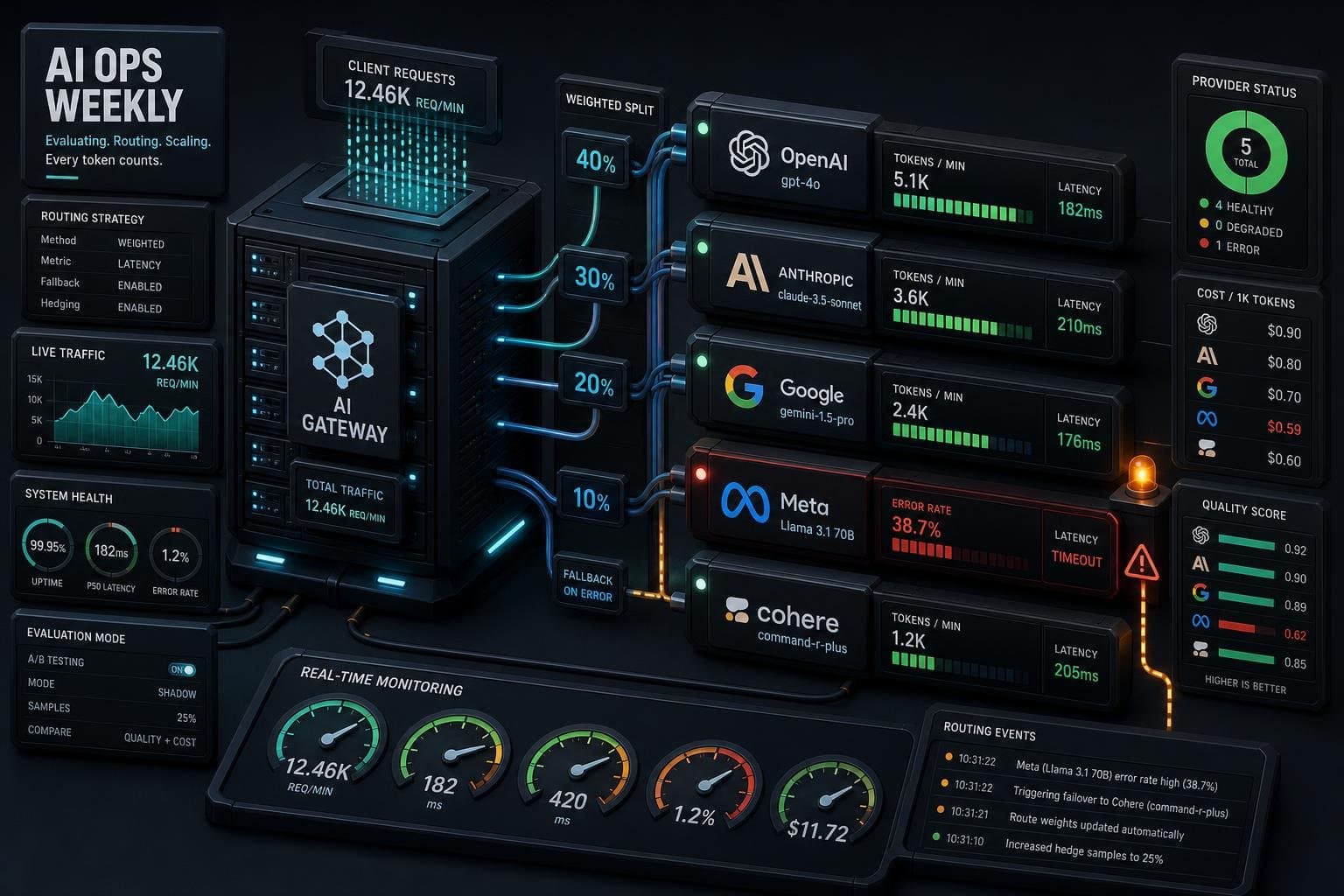

A small team's production app threw a 503 from its LLM provider at 2pm on a Tuesday. Then again two days later. The engineer behind it manually failed over to a backup, updated environment variables, redeployed — and lost three customers in the fifteen minutes it took, according to a DEV Community post describing the incident. The fix looked simple on the surface: route through an OpenAI-compatible endpoint, swap the model name string, done. No adapter layers, no SDK rewrite.
That's a real improvement over hardcoding a single vendor's SDK. It's also the part of a provider migration that costs the least and gets the most attention. If your migration plan stops at "change the base URL and the model string," you've priced maybe one of the five things that actually determine whether the switch works.
The API Compatibility Layer Is a Rounding Error
A detailed breakdown from Lyceum lays out why teams consistently underestimate provider switches: the internal estimate that circulates — "a few days of work, it's OpenAI-compatible" — prices the cheapest of five cost components and silently drops the other four. Config change, sure. Base URL, API key, model identifier. But a shared request format doesn't guarantee shared behavior. Different checkpoints, different quantization, different chat templates and default parameters can all shift outputs even when the public model name matches.
That matters because a provider migration isn't a networking change, it's an evaluation problem wearing a networking change's clothes. Lyceum's framework counts evaluation, prompt re-tuning, integration work, parallel traffic, and review as separate line items — and notes that a serious eval suite gets run more than once: once to baseline the incumbent, once per candidate provider, again after you've re-tuned the prompt to compensate for whatever the new model does differently. Every one of those passes burns tokens on both providers. If your existing eval harness wasn't built with that in mind, you're writing it mid-migration, under time pressure, while the clock on your current provider's problems keeps ticking.
Routing Infrastructure Turns "Switch" Into "Compare," Which Is the Point
The teams that handle this well don't think of it as a cutover at all. A gateway-layer approach described by Tetrate frames the safe pattern as: keep apps pointed at a stable alias, send a small share of real traffic to the candidate model, compare the two groups, and raise the share in steps only once the data backs it up. The mechanism — traffic splitting with weighted percentages, automatic fallback on failure, graceful degradation when a budget runs out — is less interesting than the discipline it enforces: you cannot evaluate a provider switch by reading the pricing page. You evaluate it by running both in production, side by side, on real requests, until you have enough signal to trust the comparison.
That's expensive in a way that doesn't show up on anyone's dashboard until the bill arrives. Running two providers in parallel means paying for both, on every request in the canary cohort, for as long as the comparison needs to run. A team that skips the parallel-traffic phase to save a week of spend is the same team that discovers, three weeks post-cutover, that the new provider handles a specific tool-call format or system-prompt pattern differently in ways the smoke tests never caught.
Whatever Replaces Your Current Setup Will Have Its Own Token Bill to Audit
It's worth remembering that switching providers doesn't make your token economics someone else's problem. The architectural defaults that drive cost — context length, cache hit rate, calls per task — travel with you. CloudZero's writeup on ProjectDiscovery's inference bill is a good reminder of how much is recoverable from structure rather than vendor choice: moving dynamic working memory out of the system prompt lifted their cache hit rate from 7% to 74%, and explicit cache breakpoints took it further, cutting total spend by 59-70% on the same model, same features, same traffic. A provider migration is a natural moment to re-audit that structure, because you're already rebuilding the request pipeline. Skip that audit and you'll likely just reproduce your old cost problem against a new vendor's meter.
None of this means provider migrations aren't worth doing — outages, pricing changes, and model quality drift are all legitimate reasons to move. It means the real cost of the move is evaluation and parallel-run time, not engineering hours on the adapter code. Budget for the five components, not the one that fits in a changelog line.